
What It Actually Means to Sit With Your Feelings Without Spiraling.

You are anxious, hurt, angry, embarrassed, disappointed, or confused, and now you are supposed to just sit there with it.
But what does that actually mean?
For a lot of people, sitting with an emotion turns into analyzing it.
You replay the conversation. You think about what the other person meant. You try to figure out what changed. You predict what might happen next. You look for an explanation that will make the feeling disappear.
At that point, you are not only feeling the emotion anymore.
You are building a story around it.
Psychology makes an important distinction here. Emotional acceptance is not the same as endlessly thinking about why you feel the way you do. Acceptance is closer to allowing an emotional experience to be present without immediately trying to suppress it, escape it, or solve it.
Feeling rejected does not always mean you were rejected.
Feeling afraid does not always mean something bad is happening.
Feeling angry does not automatically tell you what the other person intended.
Your emotions are real, but the story your mind builds around them still needs to be examined carefully. The goal is to understand what the feeling may be pointing to without repeatedly replaying, analyzing, or expanding the story until reflection turns into rumination.
There is also evidence that being more accepting of thoughts and feelings is associated with less stress-related rumination, which helps explain why acceptance and repeatedly analyzing an emotional experience are not the same process.
So sitting with an emotion is not about letting it take over.
It is about staying with it long enough to understand what is actually there before deciding what it means or what you want to do about it.
Notice what is happening in your body first.
Before you explain the emotion, notice it. Tight chest, heavy stomach, racing heart, tension in your jaw, urge to cry, urge to text, urge to leave. This helps separate the physical experience from the story forming around it.
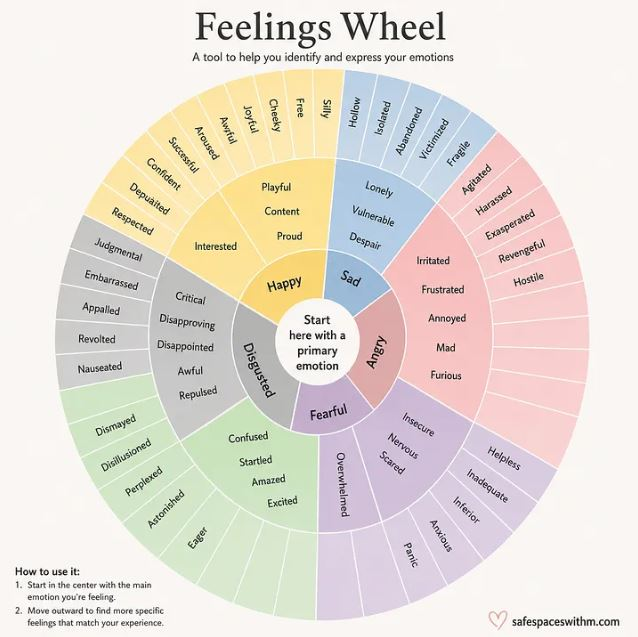
Name the emotion as specifically as you can.
Try to go beyond “I feel bad.” Is it fear, rejection, embarrassment, jealousy, anger, disappointment, loneliness, grief, shame, uncertainty? Naming the emotion can help make the experience feel more defined and less overwhelming.
Separate what happened from what you think it means.
Write down two things:
- What do I actually know?
- What am I assuming?
Give the emotion a little room without immediately acting on it.
You do not have to send the message, make the decision, fix the relationship, or solve the problem while you are still highly activated. Let the intensity come down first.
Choose a regulation tool that actually fits what you need.
If you are overstimulated, you may need quiet. If you are stuck in your head, you may need movement or connection. If you are confused, you may need to write. If you are spiraling, you may need grounding before reflection.
Learning to sit with your emotions can help you understand what is happening underneath the reaction, but doing that alone is not always easy.
You may recognize that you feel anxious, rejected, angry, or overwhelmed and still have trouble understanding why this particular situation affects you so strongly, what pattern you are repeating, or what you actually need next.
That is the kind of work we can explore together through 1:1 Inner Relationship Coaching.

Our sessions give you a space to slow the situation down, understand your emotional patterns, and work through what is happening without being handed generic advice or told what you “should” feel.
The goal is to help you understand yourself well enough that your emotions can give you information without having to control what you do next.